Large dogs bring real force to a wood floor. Clipped nails still tap across the boards. A sudden turn can leave marks, and tracked grit can act like sandpaper. Which wood flooring is best for large dogs? Hickory is a strong contender because it is notably hard, but no species makes a floor scratch-proof.
The American Hardwood Information Center lists hickory at about 1,820 pounds-force on the Janka hardness scale, compared with roughly 1,290 for red oak. The USDA Forest Products Laboratory’s Wood Handbook provides a technical reference for wood properties, while NWFA guidance stresses proper installation and moisture control. These sources help explain durability, but they do not prove that hickory always outperforms every flooring choice in a dog’s home. Janka measures resistance to denting, not nail scratches, finish wear, or damage from grit. That distinction matters.
Hickory’s varied grain and color can also make small marks less conspicuous than they might be on a smooth, uniform surface. Still, it has trade-offs. Its pronounced grain may not suit every room, and a hard floor can feel unforgiving underfoot. Finish quality, board construction, cleaning habits, and nail trimming all affect the result. A mat beside the back door helps. So does a quick sweep after muddy walks. I would not call hickory indestructible; that would overpromise. It is a practical option for many large-dog households, especially when owners balance its hardness with realistic care and maintenance.
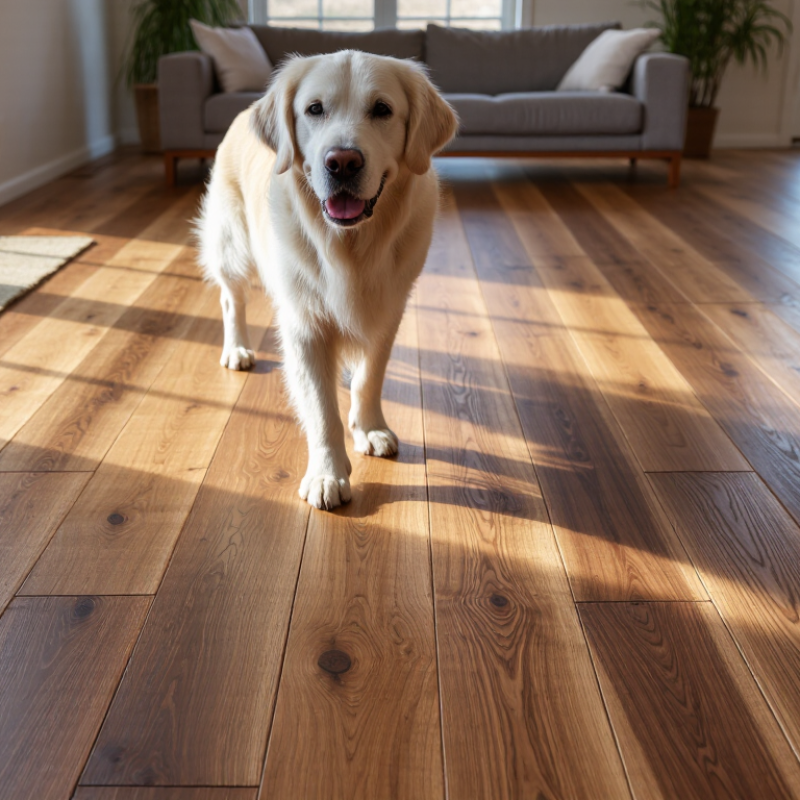
Large dogs put real pressure on floors. Their weight, quick turns, and long nails can leave dents or scratches, especially near doorways and food bowls. Hickory is a practical option because it is a dense hardwood that generally resists denting better than softer species. Its varied grain can also make small marks less noticeable. That helps, but it is not a force field.
A dog-friendly floor needs more than hardness. A smooth, glossy surface may feel slippery under a running dog, while a textured finish can offer better footing. Choose a durable finish, and keep nails trimmed to reduce surface wear. Wipe up water promptly; repeated spills around a bowl can affect wood over time. Installation matters too. Proper acclimation and moisture control help reduce the risk of gaps or movement. Hickory can still scratch, and individual boards vary.
Hickory earns its reputation for handling busy homes because its dense grain resists dents better than many common flooring woods. The USDA Forest Products Laboratory’s Wood Handbook (FPL-GTR-282, 2021) reports side-hardness near 1,880 pounds-force for shagbark hickory, compared with about 1,290 for red oak. That difference can matter when a large dog turns sharply beside the sofa or drops a hard toy on the floor. Still, hardness is not scratch-proofing. Grit under paws and long nails can mark the finish, and boards may vary.
Hickory’s pronounced grain can also make small marks less conspicuous than they are on a smooth, pale surface. That is a visual advantage, not a promise that wear disappears. Finish quality, board construction, cleaning habits, and indoor humidity all affect how flooring performs. A neglected detail: hickory’s contrasting grain may look busy in a small room, so view sample boards in your own lighting before choosing.
Tips: Keep nails trimmed and place washable mats near entrances to catch grit. Sweep often; a few grains can act like sandpaper under running paws. Ask an experienced flooring installer about a durable finish and suitable cleaning methods. Don’t use excess water. Dog-friendly flooring still needs care.
Hickory’s toughness helps when a large dog launches into a turn or drops heavily onto the floor. The National Wood Flooring Association’s published Janka ratings place hickory around 1,820 pounds-force, compared with about 1,290 for red oak. The Janka test measures resistance to indentation, not resistance to every scratch. That distinction matters.
Not scratchproof.
Dog nails can still mark the finish, especially if they are long or catch the same spot repeatedly. Grit is another culprit: tiny particles dragged in from outside can act like sandpaper beneath moving paws. Hickory’s pronounced grain and color variation may make minor scuffs less noticeable than on a uniform, pale surface. But deeper scratches can still show, and darker stain may reveal dust and wear more clearly.
A practical setup helps. Keep nails trimmed, place washable mats near doors, and sweep grit before it travels through the room. Choose a durable finish and ask the installer about its maintenance requirements; the wood species alone cannot guarantee performance. Hickory can suit busy homes, but I would not treat hardness as a substitute for care. A dog’s running route may still become a visible path over time.
Hickory suits large-dog homes because it handles impact better than many common hardwoods. The USDA Forest Products Laboratory’s Wood Handbook lists hickory at approximately 1,820 lbf on the Janka hardness scale. Red oak measures about 1,290 lbf. That difference matters when a 90-pound dog lands near a doorway.
However, hardness does not make hickory scratch-proof. Dog nails can mark the finish, especially when sand and grit collect under paws. The National Wood Flooring Association’s installation guidance stresses moisture control, correct acclimation, and compatible finishing systems. Those details matter more than a glossy product label. In practice, a low-sheen polyurethane finish often suits dog-friendly rooms. Satin or matte surfaces hide fine marks better than high gloss.
Choose a finish with strong abrasion data, not vague claims. Testing based on ASTM D4060 can indicate resistance to surface wear, although laboratory results cannot copy every home. A textured or lightly brushed hickory surface can disguise small scratches and muddy paw trails. Keep entrance mats near doors. Trim nails regularly.
Small details help.
One honest limitation remains: hickory’s dramatic grain can show dents and color changes unevenly. Darker stains may emphasize those flaws. A clear, water-based finish usually preserves its natural variation and dries with less odor. Yet it may require careful application. Experienced installers should check subfloor moisture, board movement, and the manufacturer’s maintenance requirements before finishing.
| Consideration | Fact or option | What it means for a dog-friendly home | Practical guidance |
|---|---|---|---|
| Hickory hardness | Commonly listed at about 1,820 lbf on the Janka hardness scale. | Hickory is harder than common domestic species such as red oak (about 1,290 lbf) and white oak (about 1,360 lbf), so it can better resist some dents from everyday impacts. | Hardness is not a guarantee against scratches, dents, or damage from sharp dog nails and grit. |
| Natural appearance | Hickory often has noticeable variation in color and grain from board to board. | Its varied pattern may make small marks less conspicuous than they are on a very uniform surface, though the effect depends on the color and lighting. | View full-size samples in the room before choosing a stain or finish. |
| Aluminum-oxide factory finish | A durable factory-applied finish commonly used on prefinished hardwood flooring. | Can offer strong resistance to everyday surface wear. A damaged area may be difficult to blend with a spot repair. | Ask the flooring supplier about care instructions, repair options, and the finish warranty. |
| Water-based polyurethane | A clear coating that generally adds less amber color than oil-based polyurethane. | A practical option when preserving a lighter, more natural hickory color is important. Performance depends on the specific product and application. | Follow the product’s drying and curing instructions before allowing dogs back onto the floor. |
| Oil-based polyurethane | A film-forming finish that typically adds a warmer, amber tone and may take longer to dry than some water-based options. | Can provide a protective surface, but the color change may alter the look of hickory over time. | Confirm ventilation, drying time, and full-cure guidance with the installer or product instructions. |
| Hardwax oil | An oil-and-wax finish that leaves a different surface feel and maintenance profile from polyurethane coatings. | Some products allow localized maintenance, but the floor may need more regular care and is not immune to liquid or scratch damage. | Use only the cleaner and maintenance products specified for that finish. |
| Surface sheen | Matte and low-sheen finishes reflect less light than glossy finishes. | Lower sheen can make everyday dust and small surface marks less noticeable; it does not make the floor harder. | Choose sheen based on appearance and cleaning preferences, not as a substitute for a protective finish. |
| Dog nails and grit | Untrimmed nails and abrasive particles tracked indoors can scratch or wear the finish. | These factors can affect even a hard wood floor. | Keep nails maintained, use entry mats, and sweep or vacuum regularly with a hardwood-safe attachment. |
| Water and accidents | Standing liquid can damage wood flooring and its finish. | Hickory is not waterproof; moisture can cause staining, finish damage, or movement in the wood. | Wipe up spills promptly and follow the flooring maker’s cleaning and humidity recommendations. |
Hickory is a tough hardwood, but large dogs still bring grit, moisture, and sharp nails indoors. Hard does not mean scratch-proof. Fine dirt can act like sandpaper under busy paws, so sweep or vacuum high-traffic areas often with a soft brush attachment. Wipe muddy pawprints promptly with a slightly damp cloth, then dry the spot. Avoid soaking the floor or using abrasive cleaners; excess water can damage wood and its finish. Place a washable mat near the door and beneath water bowls. Small habits matter.
Keep your dog’s nails trimmed, and check them regularly for rough edges. Add felt pads under furniture, especially where a dog’s bed or crate might shift. Rugs can help in hallways, but choose ones with backing that will not discolor the finish. Follow the flooring maker’s care guidance when choosing cleaners, since finishes differ. A realistic routine accepts that some marks may appear over time. I would not scrub every tiny scuff; aggressive cleaning can dull the surface faster than ordinary wear. Focus on removing grit and spills, and let the floor look lived in.
Hickory is dense and generally resists dents better than softer wood species. Its varied grain can make small scratches less obvious. It is helpful, not perfect.
No floor is scratch-proof. Long nails, grit, and fast turns can still mark hickory. Regular nail trimming reduces surface wear.
A smooth, glossy finish may feel slippery during quick turns. A lightly textured finish can provide better footing. Watch for skidding.
Place one beneath water bowls and another near the entrance. Rugs can also help in busy turning areas. Keep them stable.
Wipe them quickly with a slightly damp cloth. Dry the area afterward. Avoid soaking the floor.
Yes. Fine grit can act like sandpaper under busy paws. Sweep or vacuum high-traffic areas often using a soft brush attachment.
Check the backing carefully because some materials may discolor the finish. A rug should also stay flat and reduce slipping. Placement may need adjustment.
Yes. Proper acclimation and moisture control can reduce gaps or movement. Even well-installed boards may vary slightly.
Check them regularly, especially for rough edges. Trimmed nails create less pressure on the finish. Small routines matter.
Not always. Aggressive scrubbing can dull the surface faster than ordinary wear. I would focus on grit and spills, then accept some lived-in marks.
For homes with large dogs, hardwood flooring must withstand heavy paws, daily movement, and occasional accidents while remaining comfortable and attractive. Which wood flooring is best for large dogs? Hickory is a strong contender because its natural hardness helps it resist dents and everyday wear. Its varied grain can also make minor scratches and signs of pet activity less noticeable than they might be on a smoother, more uniform surface.
The right finish adds another layer of protection, so consider a durable option that suits your household and is simple to maintain. Regularly sweep away grit, wipe up spills promptly, and use protective pads beneath furniture to reduce avoidable damage. With thoughtful finish selection and consistent care, hickory floors can stay appealing and perform well in a busy home shared with large dogs.

DCTan Door