Deciding whether to repair or replace your garage door can be challenging. This choice involves understanding costs, safety, and efficiency. Many homeowners feel overwhelmed by the options available. Asking, "Should I repair or replace my garage door?" is a common dilemma.
A well-functioning garage door enhances your home’s security and curb appeal. However, a door showing clear signs of wear may require immediate attention. Think about the age of your door. Older models might lack modern insulation and safety features, making replacement more appealing. In contrast, minor issues like a broken spring can often be repaired easily.
Consider aesthetic appeal as well. A new garage door can significantly boost your home's overall value. Weigh the immediate benefits against potential long-term savings. Ignoring the signs of damage could lead to more extensive problems. Understanding when to repair versus when to replace is vital for making an informed decision.
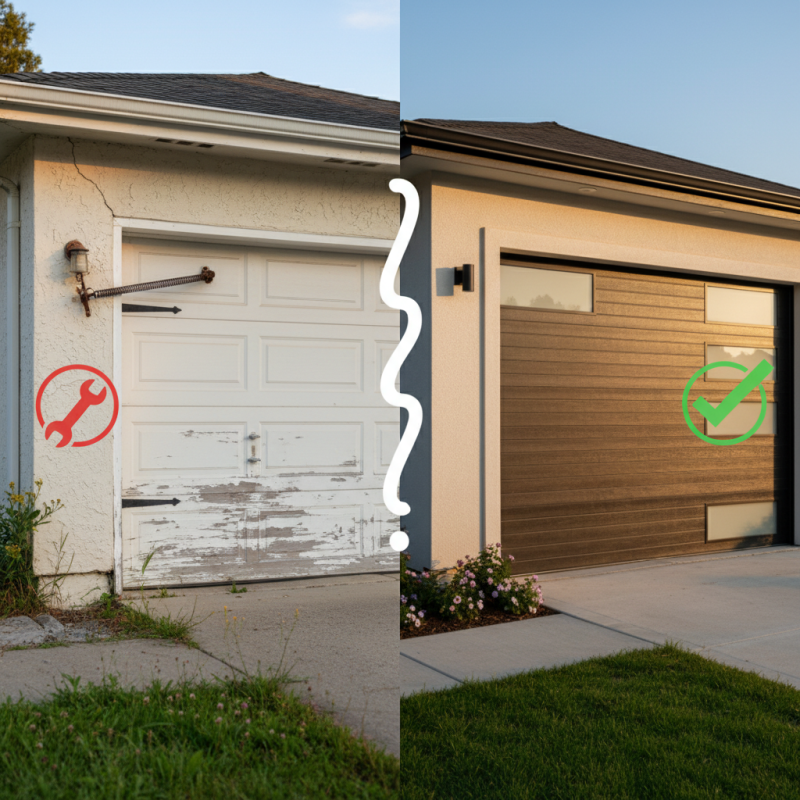
Factors to Consider When Deciding on Garage Door Repair or Replacement
When considering whether to repair or replace your garage door in 2026, several factors come into play. One significant aspect is the age of your door. The average lifespan of a garage door is around 15 to 30 years, depending on the material and usage. Research indicates that if your door is approaching or exceeding this lifespan, replacement could be the wiser choice.
Another critical factor is the cost of repairs versus replacement. Industry data shows that minor repairs can cost around $150 to $300, while a complete replacement may range from $800 to $2,500. If the repairs are frequent or exceed 50% of the cost of a new door, replacement becomes more appealing. Additionally, improvements in technology could mean a new door offers better insulation and security features, which are especially valuable in today's market.
Aesthetics also cannot be overlooked. A dated garage door can detract from your home's curb appeal. Many homeowners see a return on investment when upgrading to a modern design. Moreover, consider that the decision might not be black-and-white. Emotional attachment to a well-used door may cloud judgment. Reflect on practical long-term benefits versus sentimental value, as personal bias can often complicate these choices.
Common Garage Door Issues That Indicate a Need for Replacement
Many homeowners face garage door issues that can lead to the decision to replace rather than repair. One common indicator is severe rust or corrosion. If the door is corroded beyond the surface, it may compromise its structural integrity. It’s not just unsightly; it can lead to further damage that might be costly to fix.
Another issue is frequent malfunctions. If your garage door opener fails repeatedly, it might be time for an upgrade. Continual breakdowns signal potential issues with the door’s balance or alignment. These concerns can pose safety risks, as a malfunctioning door can lead to accidents.
Finally, if the door lacks insulation or is outdated, consider a replacement. An uninsulated door wastes energy, increasing your utility bills. A modern door can provide better energy efficiency and security. Taking these factors into account will help you make a more informed decision for your garage door needs.
Cost Analysis: Repairing vs. Replacing Your Garage Door
When deciding whether to repair or replace your garage door in 2026, cost analysis plays a crucial role. Repairs typically range from $150 to $500, depending on the issue. For example, fixing a spring or cable might be on the lower end, while motor issues can push costs higher. A 2023 report indicated that 65% of homeowners opted for repairs instead of replacements, mostly due to budget constraints.
On the other hand, replacement costs generally start at $1,200 and can exceed $5,000. This includes labor and materials. Investing in a new garage door can increase your home’s value by up to 4%, as per recent market analysis. Yet, some homeowners hesitate, fearing they might not recoup the expense. It’s vital to consider how long you plan to stay in your current home.
Both options have drawbacks. Repairs may offer a temporary fix, potentially leading to repeated costs. New doors can be costly upfront and require maintenance. Evaluating your long-term plans and the condition of your garage door is essential for making an informed choice.
Life Expectancy of Garage Doors: When to Make the Switch
When considering garage doors, understanding their life expectancy is crucial. Most garage doors last between 15 to 30 years. This range can vary based on material, maintenance, and usage. Steel doors typically last longer than wooden ones, which may require more frequent repairs. Knowing this can guide your decision.
In 2026, if your garage door is approaching its life expectancy, it might be time to evaluate it carefully. The cost of frequent repairs can accumulate quickly. Reports suggest that owners often spend around $200 to $500 annually on maintenance. In contrast, investing in a new door may offer warranty benefits and longer durability, which can be financially wise.
Consulting an expert can offer deeper insights into your specific situation. They can assess wear and tear on your door, considering factors like rust, cracks, and overall efficiency. This evaluation can be pivotal. If issues are identified early, it could save you from larger expenses later on. Ultimately, weighing the short-term costs of repair against the long-term advantages of replacement is essential for making an informed decision.
Benefits of Upgrading Your Garage Door in 2026
When considering whether to repair or replace your garage door in 2026, upgrading offers several key benefits. Modern garage doors often come with enhanced
security features. According to industry reports, homes with updated garage doors experience a 30% reduction in break-ins.
An upgraded door often includes better locking mechanisms and smart technology, providing homeowners with peace of mind.
Energy efficiency is another significant aspect. Older garage doors can contribute to increased heating and cooling costs. Studies show that a new garage door can improve
insulation by up to 20%. This can lead to lower energy bills and a more comfortable home environment year-round. Homeowners frequently overlook the impact
of a well-insulated garage on overall energy consumption.
Tips: Think about aesthetics. A new garage door can boost curb appeal, raising your home’s value. Consider color and
material choices carefully. Additionally, assess your current door's condition honestly. Repairs might only provide temporary relief, leading to more issues later.
Investing in a replacement can be more cost-effective in the long run.
FAQS
: Repairs typically range from $150 to $500, depending on the issue.
Many homeowners consider repairs due to budget constraints and lower immediate costs.
Replacement costs usually start at $1,200 and can exceed $5,000, including labor.
A new garage door can increase your home's value by up to 4%.
Upgraded doors often feature improved locks and technology, reducing break-ins by 30%.
A new door can enhance insulation by up to 20%, potentially lowering energy costs.
Repairs may provide only a temporary fix, leading to repeated costs over time.
They should carefully choose color and material, as they can boost curb appeal.
It’s crucial; knowing how long you plan to stay helps evaluate repair vs. replacement.
Homeowners often overlook how a well-insulated garage impacts overall energy consumption.
Conclusion
In the decision-making process of "Should I repair or replace my garage door," several factors must be considered. Common issues such as frequent malfunctions, noise during operation, or visible wear can indicate it's time for a replacement rather than a repair. A thorough cost analysis helps weigh the benefits of repairing against the expenses of a new installation, especially when factoring in the life expectancy of garage doors, which typically ranges from 15 to 30 years.
As we approach 2026, the benefits of upgrading your garage door not only include improved functionality and aesthetic appeal but also enhanced security and energy efficiency. Ultimately, this decision requires careful evaluation of the current condition, financial implications, and long-term benefits to ensure the best outcome for your home.

 DCTan Door